The challenge
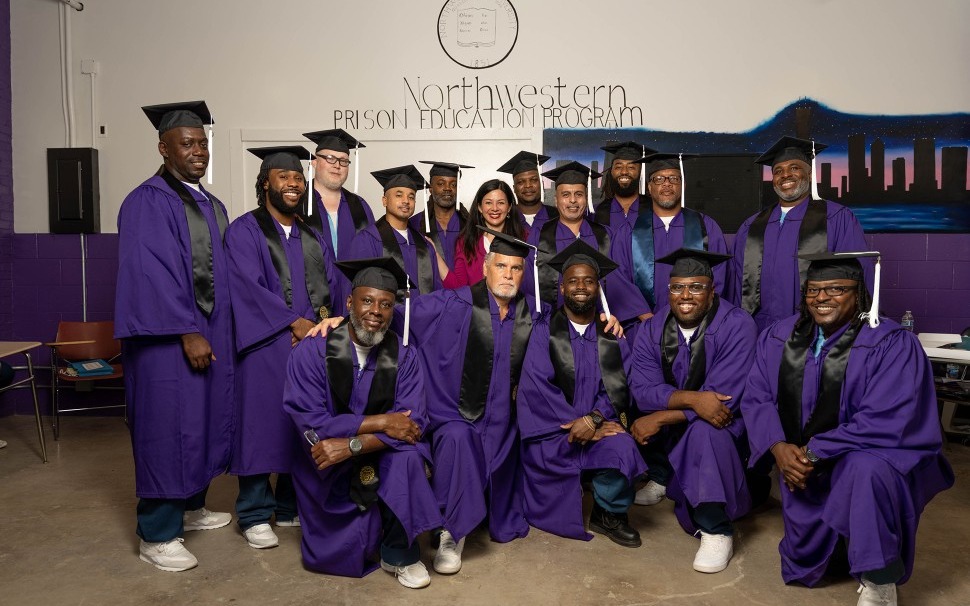
A historic graduation would bring new attention to NPEP. The program needed a public voice that could meet it.
Students, alumni, faculty, staff, families, donors and university leaders all had a stake in how the program presented itself. The communications had to bring those audiences together without reducing incarcerated students to institutional success stories or speaking on their behalf.
That required more than a set of press materials. NPEP needed an editorial system capable of holding many voices, serving different audiences and still making clear what the program did and why it mattered.
The approach
We built the editorial foundation first, then used it to prepare for the moment.
We reshaped NPEP’s website and developed a long-term editorial strategy across its channels. At the center was a flagship magazine featuring writing and artwork by incarcerated students and alumni. We developed the publication alongside its contributors—assigning and editing stories, setting standards and managing production—while preserving a meaningful role for students in how their work and experiences were presented.
The same structure carried into newsletters, web stories, media materials and outreach around the graduation. The goal was consistency without flattening: one recognizable program story, told by people who did not all sound the same.
ExampleThe homepage, before and after
The homepage led with a call for applicants. But NPEP’s applicants are incarcerated, and people in Illinois prisons have no open internet access—so the page’s main ask was addressed to the one audience that could not read it.
Everyone who could reach the page—donors, volunteers, faculty, reporters, families—now arrives at what the program is before it asks them for anything. Deciding what a page says first means knowing who is on the other side of the screen.
The site runs on Northwestern’s shared platform, so the template, the components and the university header were fixed. That left navigation, labels and sequence as the working surface. Sections were renamed and regrouped: Supporters & Sponsors to Partners & Supporters, Why Prison Education? to The Benefits of Prison Education, People to Our Community.
New sections were added for academic support, wellness, reentry and restorative justice—work the program was already doing that the site did not document. A blog and a media inquiries page went under News & Events, so student writing and reporter requests each had somewhere to land before the graduation rather than after it.
The outcome
When the attention arrived, NPEP was ready.
Part of that was the graduation program, which we produced and wrote in full, including a biography of every graduating student. The ceremony was a historic day, and for some of these men the first time in decades they had seen family and friends. Reporters needed material; the students had a few hours. The bios gave reporters accurate, quotable detail on every graduate so that covering the day did not have to come out of that time.

The work supported national and international coverage — Reuters, The Guardian, PBS, ABC News, the Chicago Tribune, NPR Illinois, Axios, CBS Chicago, South Side Weekly and The Daily Northwestern. It also strengthened media relationships, helped attract new donors and gave staff and university partners a clearer, more consistent way to talk about the program.
Most importantly, NPEP had a public voice its students, staff and supporters could recognize as their own.